Clinical case
A 9-year-old child attends after eruption of the lower right second premolar. The tooth has a yellow-brown pitted enamel defect on the buccal surface. The parent reports that the lower right primary molar previously had a large abscess and was extracted.
Pathophysiology
Turner tooth, also called Turner hypoplasia, is a localised enamel defect of a permanent tooth caused by infection or trauma affecting its primary predecessor. It usually affects a single permanent tooth and is therefore distinguished from generalised enamel defects such as amelogenesis imperfecta.
Periapical infection or trauma to a primary tooth can damage the developing enamel organ of the permanent successor. This disrupts ameloblast function and enamel matrix formation.
The result is a localised hypoplastic or hypomineralised defect in the successor permanent tooth. Turner hypoplasia is classically associated with previous infection or trauma of a primary predecessor.
Epidemiology and Risk Factors
Non-modifiable | Modifiable |
|---|---|
Tooth position (premolars more commonly affected) | Untreated caries in primary teeth |
Stage of permanent tooth development (younger developing teeth more vulnerable | Dental abscess in primary tooth |
Close relationship between primary roots and permanent successor | Dental trauma to primary teeth |
Clinical Features
Symptoms | Signs | Image |
|---|---|---|
Discoloured permanent tooth | Single affected permanent tooth | 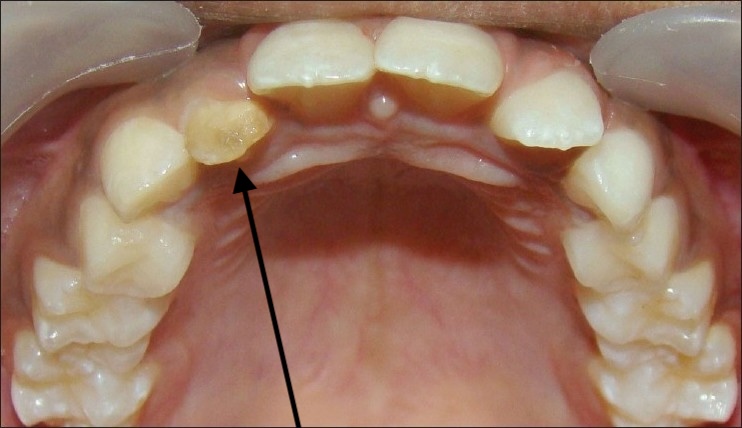 |
History of primary tooth infection or trauma | Pitted, grooved or missing enamel | |
Aesthetic concerns | Yellow-brown discolouration | |
Sensitivity | Rough surface |
Investigations
Primary investigations:
Full medical and dental history
Clinical examination and dental charting
Periapical radiograph of affected tooth
Gold standard investigation:
Diagnosis is usually clinical, supported by history of trauma or infection in the predecessor primary tooth.