Clinical case
An 8-year-old child has horizontal grooves and pits affecting several permanent incisors and first permanent molars. The parent reports that the child was seriously unwell with prolonged fever and hospital admission during infancy.
Pathophysiology
Chronological enamel hypoplasia is a developmental enamel defect caused by a systemic disturbance during the period of enamel formation. The defect affects the parts of teeth forming at the time of the illness or metabolic insult. It therefore appears in a chronological distribution.
Ameloblasts are highly sensitive to systemic disturbance. Any significant metabolic stress during enamel matrix formation can temporarily interrupt enamel formation.
Possible causes include:
Severe febrile illness
Severe gastroenteritis
Childhood exanthems or infections
Nutritional disturbance
Prematurity or severe neonatal illness
Historical measles with secondary bacterial infection
The location of the defect corresponds to the part of the crown forming at the time of the systemic insult. If the illness occurs in utero or during the first year of life, deciduous teeth may also be affected.
Epidemiology and Risk Factors
Non-modifiable | Modifiable |
|---|---|
Timing of illness | Prevention and treatment of childhood illness |
Tooth development stage | Nutrition |
Prematurity or neonatal illness | Preventative dental care |
Clinical Features
Symptoms | Signs | Image |
|---|---|---|
History of severe illness | Horizontal rows of pits or grooves | 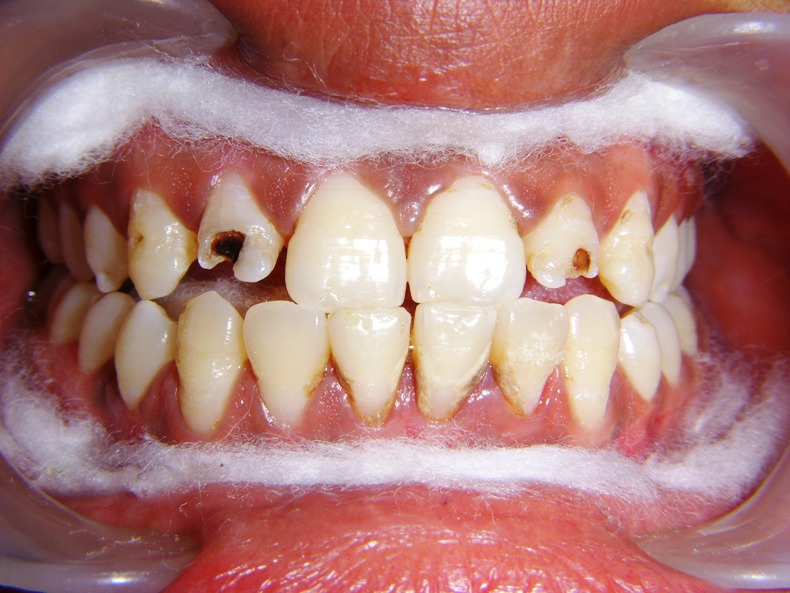 |
Rough teeth | Missing enamel bands | |
Sensitivity | Multiple teeth affected | |
Aesthetic concerns | Symmetrical distribution |